
Yacolors a manufacturer with nearly two decades of focus on industrial printing solutions, approaches this category with a clear industrial design philosophy: deliver robust, media-agnostic machines that bridge the gap between high-volume factories and agile creative shops. This article breaks down how their wide-format portfolio, encompassing DTF, Eco-Solvent, and UV technologies, is engineered for real-world production environments.
1. Defining the “Wide Format” Workhorse
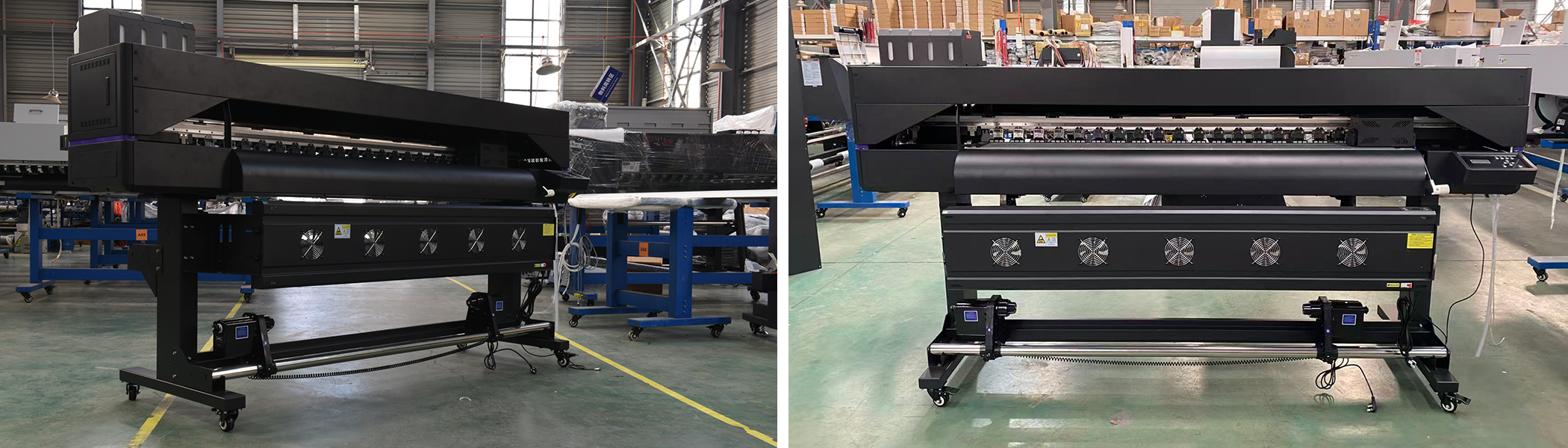
Unlike desktop printers constrained by paper trays, wide-format printers (typically handling widths from 24 inches / 60cm and beyond) are the backbone of commercial printing. Yacolors designs these systems for businesses that need to output everything from billboard-sized banners and vehicle wraps to full-roll textile prints and rigid signage.
The core design challenge is handling diverse, often heavy-duty media without compromising on speed or color accuracy. Yacolors addresses this through a modular approach, allowing the same mechanical platform to be configured with different ink systems (Eco-Solvent, UV-LED, DTF) depending on the end-user’s primary application.
2. Industrial Design for Unforgiving Environments
Walking into a busy print shop reveals why industrial design matters. These machines aren’t operating in clean offices; they face media dust, solvent fumes, and constant vibration. Yacolors’ wide-format series is built with this reality in mind.
A. Durability Through Material Selection
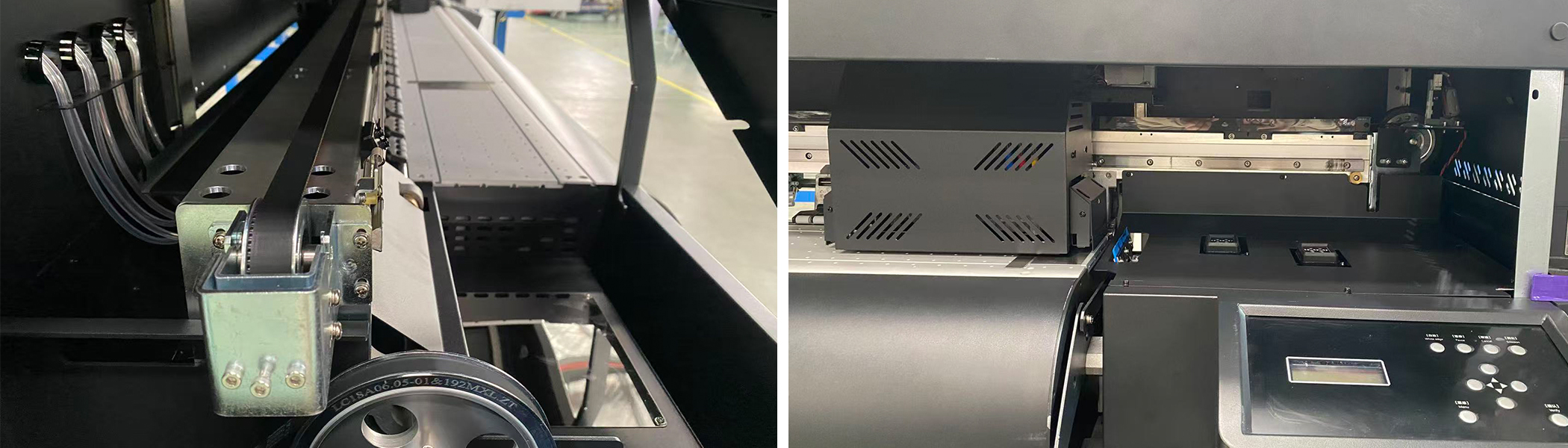
Heavy-Gauge Steel Frames: Unlike consumer-grade plastic enclosures, Yacolors printers use reinforced chassis to maintain alignment during high-speed printing and media winding. This is critical for preventing “banding” (visible lines) in large, solid-color areas.
Corrosion-Resistant Components: Solvent inks and textile adhesives can be corrosive. Critical parts like printhead carriages and ink paths are designed with coated metals or specialized plastics to ensure longevity.
B. Accessibility for Maintenance
Downtime is the enemy of production. Yacolors prioritizes serviceability in its wide-format designs:
Front & Top Access Panels: Technicians can replace printheads, clear jams, and service ink lines without pulling the entire machine away from the wall—a crucial space-saving feature in crowded workshops.
Tool-Less Media Handling: Many models feature lever-operated media clamps and easy-load roll systems, reducing the physical effort required to set up a new print job.
3. Technology Breakdown: Matching Ink to Application
Powder Management: Integrated powder shakers and containment systems to handle DTF adhesive powder.
4. Workflow Integration & User Experience
A large-format printer is only as good as its integration into the production line. Yacolors emphasizes two often-overlooked aspects of industrial design:
Media Handling Intelligence: Wide-format printers must handle rolls that can weigh over 50kg. Yacolors incorporates tension control systems and optical sensors to automatically detect media edges and prevent costly misprints on expensive vinyl or fabric.
Software Ecosystem: The hardware is supported by RIP (Raster Image Processor) software that manages color profiling and nesting (arranging multiple designs on a single sheet to minimize waste). This is especially vital for DTF workflows, where white ink opacity and color matching are non-negotiable for quality apparel printing.
5. Who Benefits from This Design Philosophy?
Yacolors wide-format printers are targeted at businesses looking for industrial-grade reliability without the industrial-grade complexity.
Sign Shops & Print Bureaus: Needing to output large, durable graphics for outdoor use (Eco-Solvent models).
Apparel & Merchandise Producers: Leveraging DTF technology for full-color, soft-handle prints on garments.
Industrial Label & Packaging Prototypes: Using UV printers to mark and decorate rigid materials.
The design ethos is clear: provide a machine that can be the primary production asset for a small business or a reliable secondary unit in a large factory, with minimal training and maintenance overhead.
Conclusion: Designed for Output, Built for Business
Yacolors’ approach to wide-format printing is a lesson in practical industrial design. By focusing on structural integrity, serviceability, and application-specific configurations, they deliver tools that are not just printers, but production partners. For any business scaling up from desktop printing or seeking to diversify its service offerings, understanding the engineered differences between a Yacolors DTF, Eco-Solvent, and UV wide-format model is the first step toward unlocking new revenue streams.