
Direct-to-Film (DTF) printing has revolutionized the custom apparel industry, offering unparalleled versatility on fabrics. For brands like Yacolors, which produce DTF printers like the YA-300 and YA-702 series, industrial design is not merely about aesthetics; it is a critical discipline that bridges the harsh realities of chemical and powder handling with the need for intuitive, shop-floor operation. This article deconstructs the industrial design philosophy that turns a complex piece of machinery into a reliable production partner.
1. The Core Challenge: Designing for a Hostile Environment
Unlike desktop printers, DTF printers operate in a challenging ecosystem. The process involves PET film, pigment inks (including heavy, particle-laden white ink), and fine hot-melt powder. The primary design constraints are clear:
Contamination Control: Powder and ink spills are inevitable. Design must prioritize containment and easy cleanup.
Maintenance Access: Printheads and ink systems require frequent attention; downtime is revenue lost.
Operator Safety: Protecting users from electrical hazards and chemical exposure is paramount.
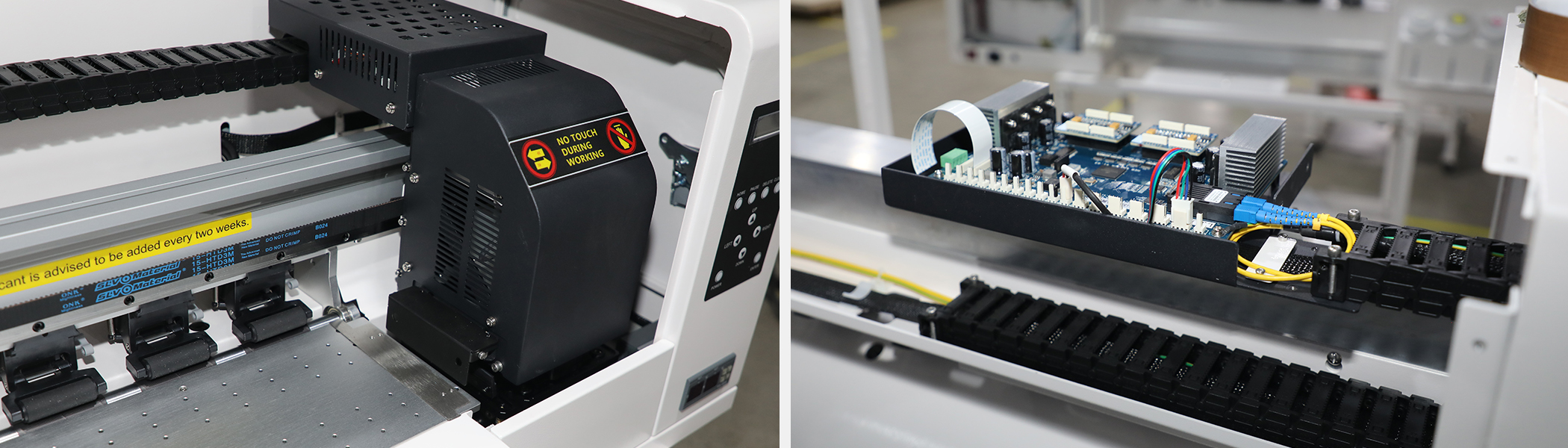
Yacolors addresses this by adopting a “Clean vs. Dirty” zoning principle. The internal layout is physically divided. The “clean zone” houses electronics and control boards, sealed off from the “dirty zone” where ink circulation and powder application occur. This segregation, often achieved through internal baffles and gasketed doors, extends the machine’s lifespan and reduces failure rates.
2. Human-Centered Design: Optimizing the Workflow
DTF printing is a multi-step dance: loading film, monitoring ink levels, applying powder, and clearing jams. The industrial design of Yacolors devices reflects a deep understanding of this workflow.
A. Ergonomic Accessibility
Front-and-Center Operation: Key consumables—ink bottles, film rolls, waste containers—are accessed from the front. This allows the machine to be placed against a wall, saving valuable workshop space.
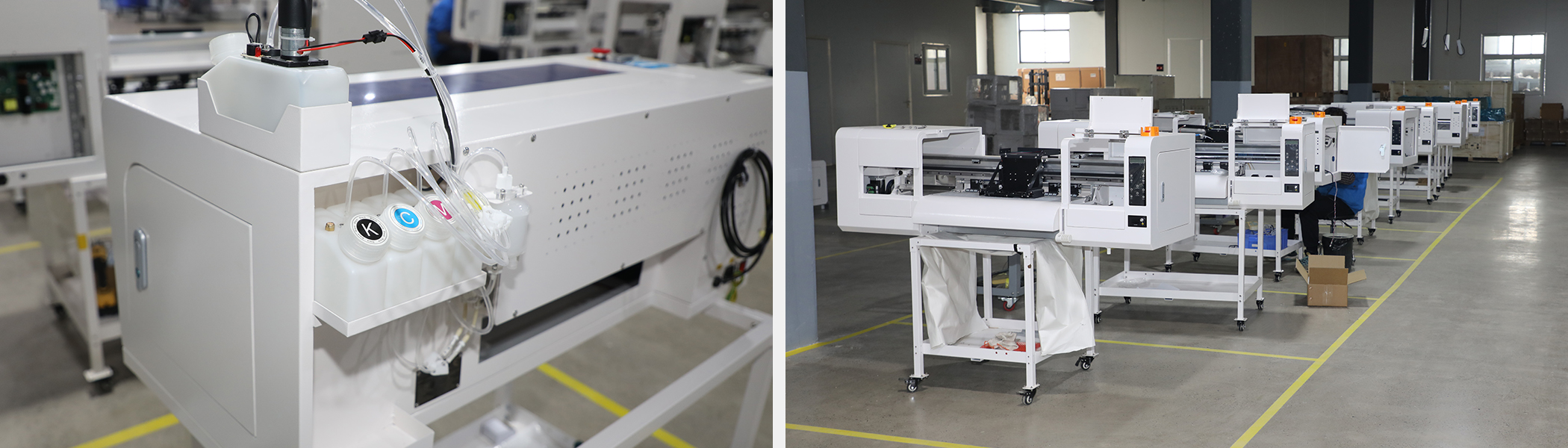
Visual Management: Ink reservoirs are often transparent or semi-transparent with clear level markings, allowing operators to perform a “walk-by” check without opening panels. Status LEDs for ink low, powder low, and head health are prominently placed.
Touchscreen Interaction: The UI is designed for gloved hands. Buttons are large, and the menu hierarchy is shallow, minimizing the number of taps needed to start a job or perform a cleaning cycle.
B. Maintenance as a First-Class Feature
Industrial design for DTF embraces Design for Serviceability (DFS). Yacolors printers feature:
Tool-Less Panels: Frequently accessed covers use latches instead of screws.
Slide-Out Trays: Powder trays and waste collection bins slide out smoothly for easy disposal without creating a dust cloud.
Color-Coded Cabling: Internal wiring harnesses for printheads and pumps are color-coded to prevent misconnection during field service, reducing human error.
3. CMF: Building Trust Through Materials and Color
The Color, Material, and Finish (CMF) strategy for industrial equipment must balance professionalism with practicality.
Materials: Yacolors typically uses powder-coated steel for the chassis, providing durability against knocks and scratches. Control panels are made from chemical-resistant plastics (e.g., ABS) that can withstand accidental IPA spills.
Color Palette: The dominant color is often dark gray or black. This is not just for a “sleek” look; it effectively hides the inevitable dust and ink splatters that occur in a busy print shop. Accent colors (like Yacolors’ signature orange or blue) are used sparingly on critical controls and branding, creating visual landmarks for the operator.
Finish: Surfaces are matte or textured to reduce glare from overhead workshop lighting and hide fingerprints.
4. The Evolution: From Industrial Workhorse to Desktop Studio
The industrial design narrative is evolving with models like the YA-D12 Desktop DTF Printer. This represents a shift in design priorities:
Form Factor: A smaller, more compact footprint designed for boutique studios rather than factories.
Noise Reduction: Enhanced acoustic damping to make it suitable for a retail environment.
Aesthetic Integration: A cleaner, more consumer-friendly appearance that doesn’t look out of place in a creative workspace, while retaining the core functional DNA of its larger siblings.
Conclusion
The industrial design of Yacolors DTF printers is a masterclass in functional pragmatism. It demonstrates that in industrial equipment, beauty is not about ornamentation but about clarity, reliability, and efficiency. By placing the operator’s workflow and the machine’s serviceability at the forefront, Yacolors has crafted tools that are not just powerful, but also a pleasure to work with day in and day out. As DTF technology continues to democratize textile printing, this user-centric design philosophy will remain the key differentiator in a crowded market.